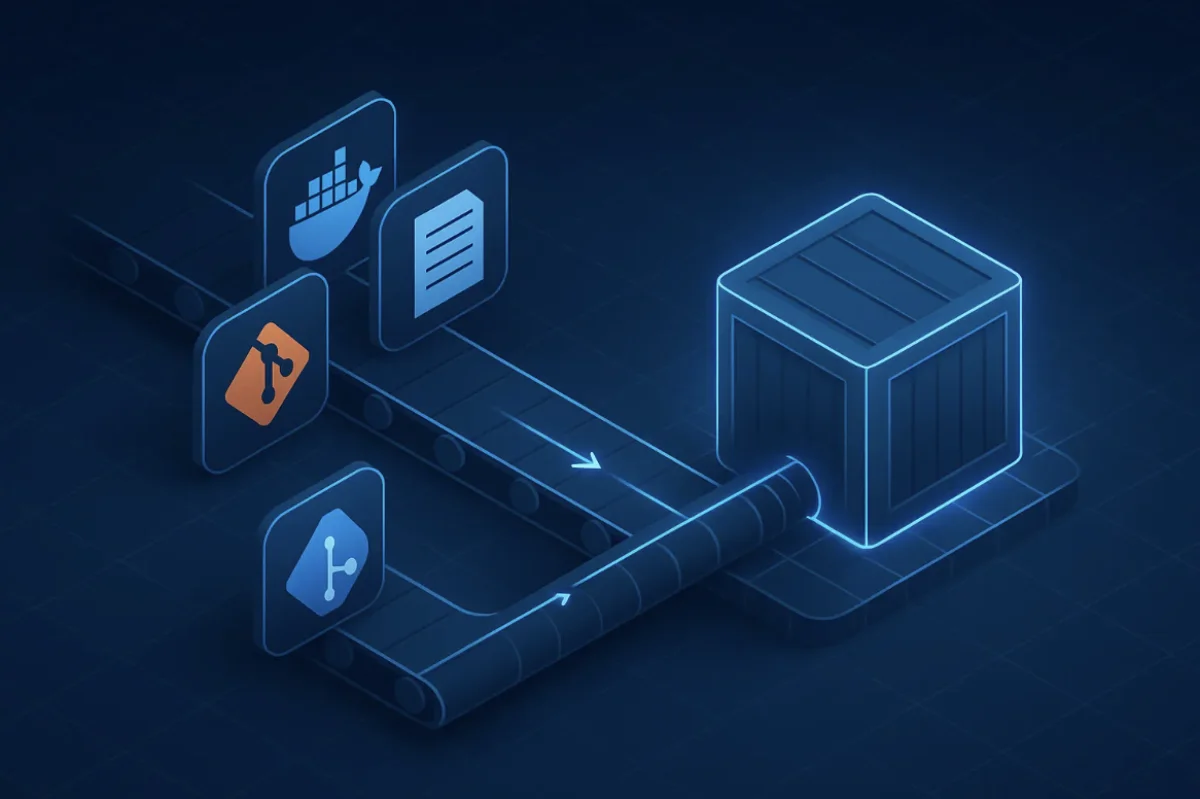
Your Business = Your Software. How to shorten Time-to-market
How to deliver software faster without losing quality—by removing friction, standardizing delivery, and empowering developers.
Why Internal Developer Platforms Are Becoming a Strategic Advantage
Speed matters—but not at the expense of quality. That was the core message of our recent webinar on faster software delivery and modern development platforms.
As more companies realize that their business is their software, the way software is delivered becomes a board-level concern. The webinar explored why traditional delivery models break down, why the classic "time–cost–quality" triangle is misleading, and how internal developer platforms help organizations ship faster without sacrificing reliability, security, or long-term maintainability.
Software Is No Longer a Cost Center
For years, IT was viewed primarily as an operational expense—something that kept systems running. That mindset no longer holds.
Today, software:
- Enables entirely new business models
- Drives customer experience and retention
- Allows companies to experiment, fail fast, and learn early
- Scales growth without linear increases in headcount
From fintech and e-commerce to agriculture and manufacturing, competitive advantage is increasingly defined by how quickly and safely companies can turn ideas into production software.
The Real Bottleneck Isn't Coding
A recurring theme in the webinar was a hard truth many teams recognize but rarely quantify:
Developers spend far less time coding than people think.
Most delays come from:
- Manual environment setup
- Access requests and permission management
- Infrastructure tickets
- Fragmented tooling
- Lack of visibility into what runs where and in which version
These frictions don't just slow teams down—they actively push developers toward shortcuts, which later surface as quality, security, or reliability issues.
Rethinking the Time–Cost–Quality Triangle
Traditional project management teaches that you can only optimize two out of three: speed, cost, quality.
The webinar challenged this assumption.
Speed and quality are not opposites. In practice, they often degrade for the same reason: manual, repetitive, and non-standardized work.
When friction is removed:
- Delivery becomes faster
- Quality improves
- Costs drop over time
The real goal isn't choosing between speed and quality—it's eliminating the friction that damages both.
Why Faster Delivery Is a Business Imperative
Even modest improvements compound quickly:
- A 20% delivery acceleration equals one full day per week
- On a 24-month initiative, that's four months saved
- Fewer months mean lower cost, earlier revenue, and reduced risk
But speed without control is dangerous. Outages, security incidents, and unstable releases can erase those gains instantly.
This is why how you accelerate delivery matters more than how much you accelerate it.
Internal Developer Platforms: Removing Friction at the Source
The webinar introduced internal developer platforms as a practical answer to this challenge.
An internal developer platform:
- Integrates existing tools into one cohesive system
- Provides "golden paths" for delivery
- Enables true self-service for developers
- Standardizes environments, pipelines, and access
- Reduces cognitive load across teams
Instead of developers navigating dozens of tools and approvals, they get:
- Production-like environments in minutes
- Automated CI/CD pipelines
- Built-in observability and monitoring
- Clear visibility into versions, deployments, and environments
- Role-based access without manual handovers
Quality Improves When Developers Can Focus
One of the strongest insights from the discussion was the link between developer experience and software quality.
When developers:
- Don't wait for access
- Don't manually wire infrastructure
- Don't guess which version is running where
They can:
- Write better code
- Follow standards consistently
- Avoid risky shortcuts under deadline pressure
Automated pipelines, testing, static analysis, and security checks become default behavior, not optional steps skipped under stress.
Standardization Without Losing Flexibility
As organizations scale, inconsistency becomes expensive:
- Every project works differently
- Knowledge lives in people's heads
- Documentation goes stale instantly
Internal platforms solve this by standardizing how things are delivered, without dictating what teams build.
The result:
- Easier onboarding
- Faster context switching between projects
- Less operational risk
- Higher long-term maintainability
From Tool Sprawl to One Cohesive System
A common pain point raised in the webinar was tool fragmentation:
- One tool for development
- Another for CI/CD
- Another for monitoring
- Another for production access
Internal platforms bring these under one roof—not by replacing tools, but by orchestrating them intelligently.
The "magic" isn't new tooling. It's integration, automation, and consistency.
Why This Matters Now
Markets move faster than ever. New entrants with lean teams and modern tooling can outpace established players quickly.
Companies that:
- Treat software delivery as a strategic capability
- Invest in developer productivity
- Remove friction instead of adding process
Are better positioned to:
- Innovate continuously
- Respond to change
- Protect quality while moving fast
Final Thought
Faster delivery is not about pushing teams harder. It's about designing systems that make the right way the easy way.
Internal developer platforms are no longer a "nice to have." They are becoming a foundational layer for organizations that want speed, quality, and control—at the same time.
Frequently Asked Questions
What is faster software delivery?
Faster software delivery means reducing the time it takes to move an idea from concept to production while maintaining reliability, security, and quality. It focuses on eliminating manual steps, standardizing workflows, and automating testing and deployment—not on pushing teams to work faster.
Why do software delivery projects slow down?
Most delays are not caused by coding. They come from manual environment setup, fragmented tooling, access approvals, infrastructure tickets, and poor visibility across environments. These frictions compound over time and significantly extend delivery timelines.
Does faster delivery reduce software quality?
No—when done correctly, faster delivery often improves quality. Automation, standardized pipelines, and continuous testing reduce human error and prevent last-minute shortcuts that typically cause defects, outages, and technical debt.
What is an internal developer platform?
An internal developer platform is a centralized system that integrates development, deployment, infrastructure, and observability tools into one self-service experience. It provides "golden paths" that allow developers to deliver software consistently, securely, and efficiently.
How do internal developer platforms improve developer productivity?
They remove repetitive and manual work, reduce cognitive load, and give developers fast access to production-like environments, automated pipelines, and real-time insights. This allows teams to focus on building features instead of managing infrastructure.
Are internal developer platforms only for large enterprises?
No. While large organizations benefit from standardization at scale, small and mid-sized teams also gain faster onboarding, fewer operational risks, and clearer delivery processes—especially as they grow.
How do internal developer platforms support quality and security?
They enforce consistent standards through automated pipelines, testing, static analysis, and access controls. Security and quality checks become built-in defaults rather than optional steps added under pressure.
What business benefits come from faster, controlled delivery?
Organizations achieve shorter time-to-market, lower operational costs, improved customer experience, higher developer retention, and reduced risk from outages or unstable releases.
How is CodeNOW related to internal developer platforms?
CodeNOW is an internal developer platform designed to orchestrate existing tools into a unified, self-service delivery system. It helps teams ship software faster while maintaining visibility, quality, and control across environments.
Written by CodeNOW